
A Tile Showroom Visit in Noida: What to Bring, Compare and Confirm
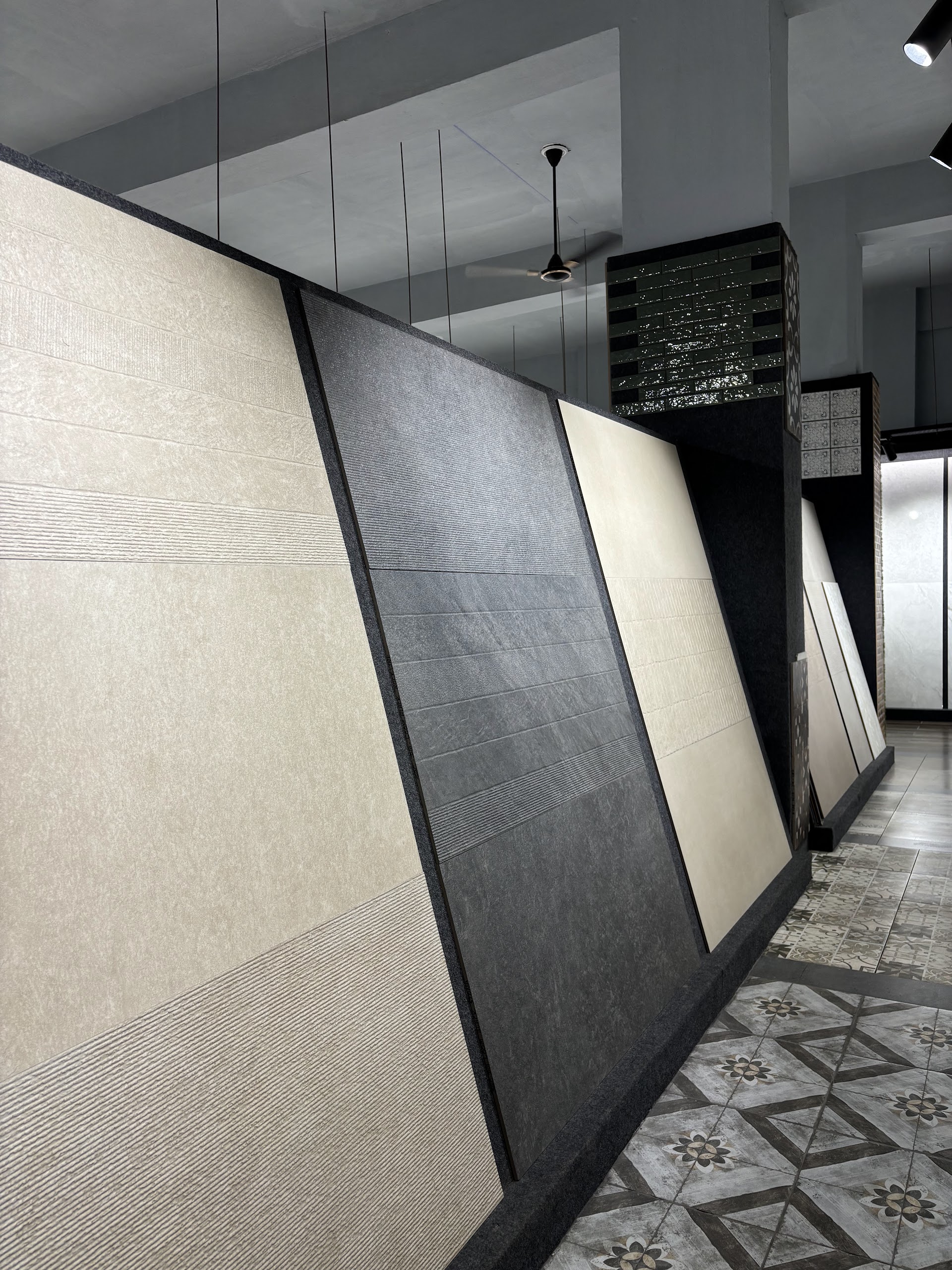
A showroom visit is most useful when it ends with a clear shortlist, not a phone filled with unidentified photographs. Tiles that look similar from across an aisle can differ in texture, pattern and response to light. These fresh photographs from our showroom photoshoot show why comparing the complete surface matters. Here is how to prepare for a visit, judge the samples in context and leave with the details needed for a confident order.
Bring the room with you
Start with a simple measured plan. Mark doors, windows, columns and fixed cabinetry, and note which walls and floors will be tiled. For a wall, include its height and the position of sockets, mirrors and shelves. These interruptions influence the layout just as much as the overall area.
Photograph the room in daylight and again with the lights on. Include a wide view as well as the surfaces that will remain after the renovation. A tile does not sit in isolation: existing window frames, kitchen cabinetry and furniture can make a warm neutral look cooler or a grey finish feel heavier than expected.
If available, bring physical paint, cabinet and upholstery samples. A screen is useful for recording a direction, but brightness and white balance make it unreliable for final colour approval. Keep practical requirements separate from aesthetic preferences. A surface intended for a wet floor needs product-specific suitability checks even if it looks right for the room.
Look at a complete tile, not just a corner
A small swatch can reveal the base colour and how a finish feels. It cannot always explain the scale of veining, the distribution of a speckled pattern or the rhythm created by several tiles. Ask to see a complete piece and, where possible, several faces from the same range together.
Check whether the design has different printed faces, a directional layout or a numbered sequence. A sample with one striking vein does not mean every piece will carry the same vein. Conversely, repeating an identical face can create a pattern that was not obvious in the sample. Discuss the intended arrangement before choosing the quantity.
Give subtle texture more than a quick glance
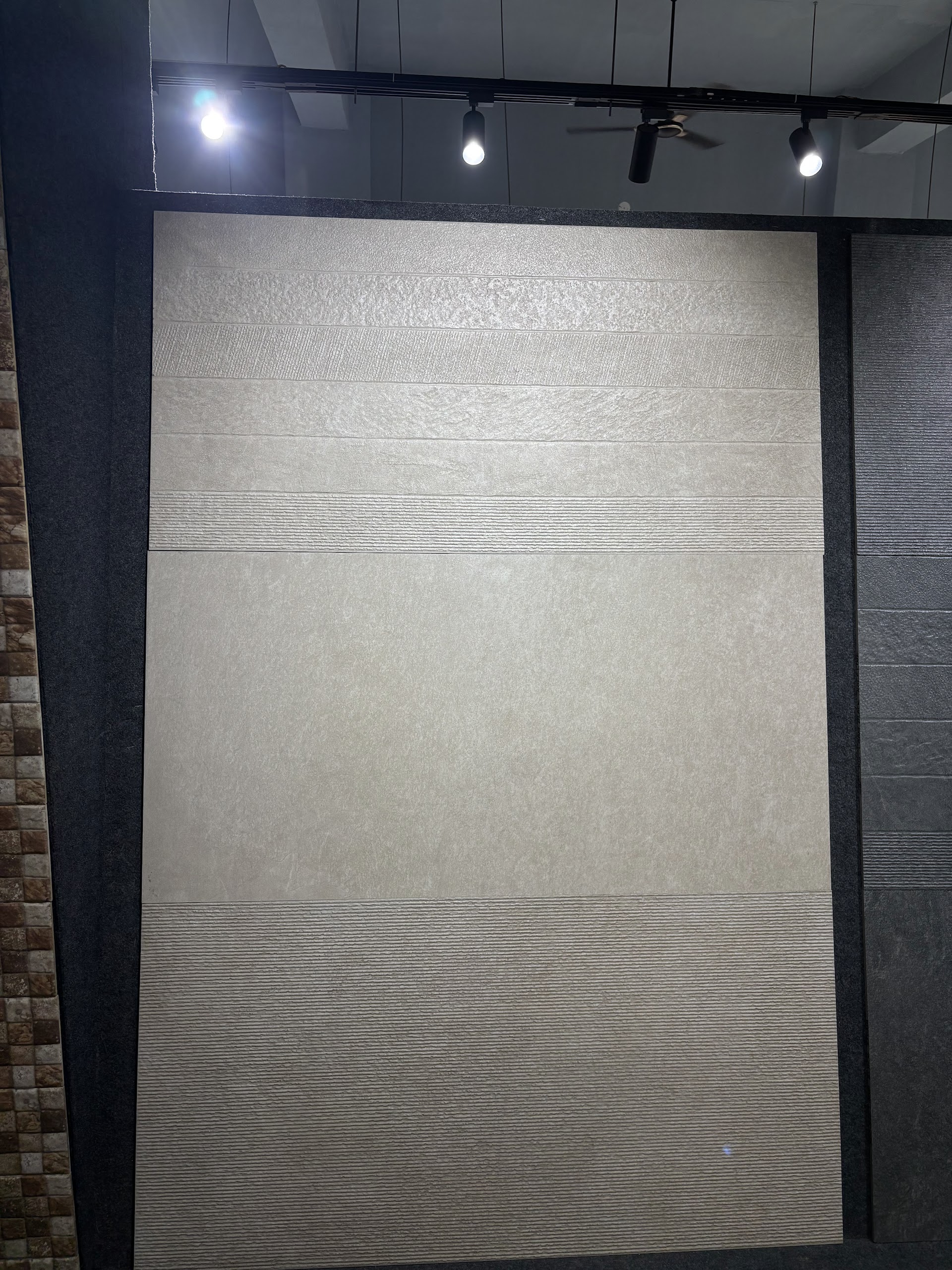
The pale display above has a restrained palette, but its surface is not visually flat. Fine texture becomes more apparent through highlights and shadows. Move slightly to either side and compare the finish from close up and from the distance at which it will usually be seen.
Ask to view a sample away from direct spotlights if possible. A ceiling light aimed across a wall may reveal relief that diffuse daylight barely shows. For a floor, place a loose sample horizontally with the showroom team's permission. Looking at a vertical display is helpful, but it does not reproduce every reflection you will see underfoot.
Do not infer slip performance or cleaning requirements from appearance alone. A matte-looking finish is not automatically approved for a shower floor. Check the manufacturer's technical information for the individual product and discuss the planned use with the installer.
Judge pattern across several pieces
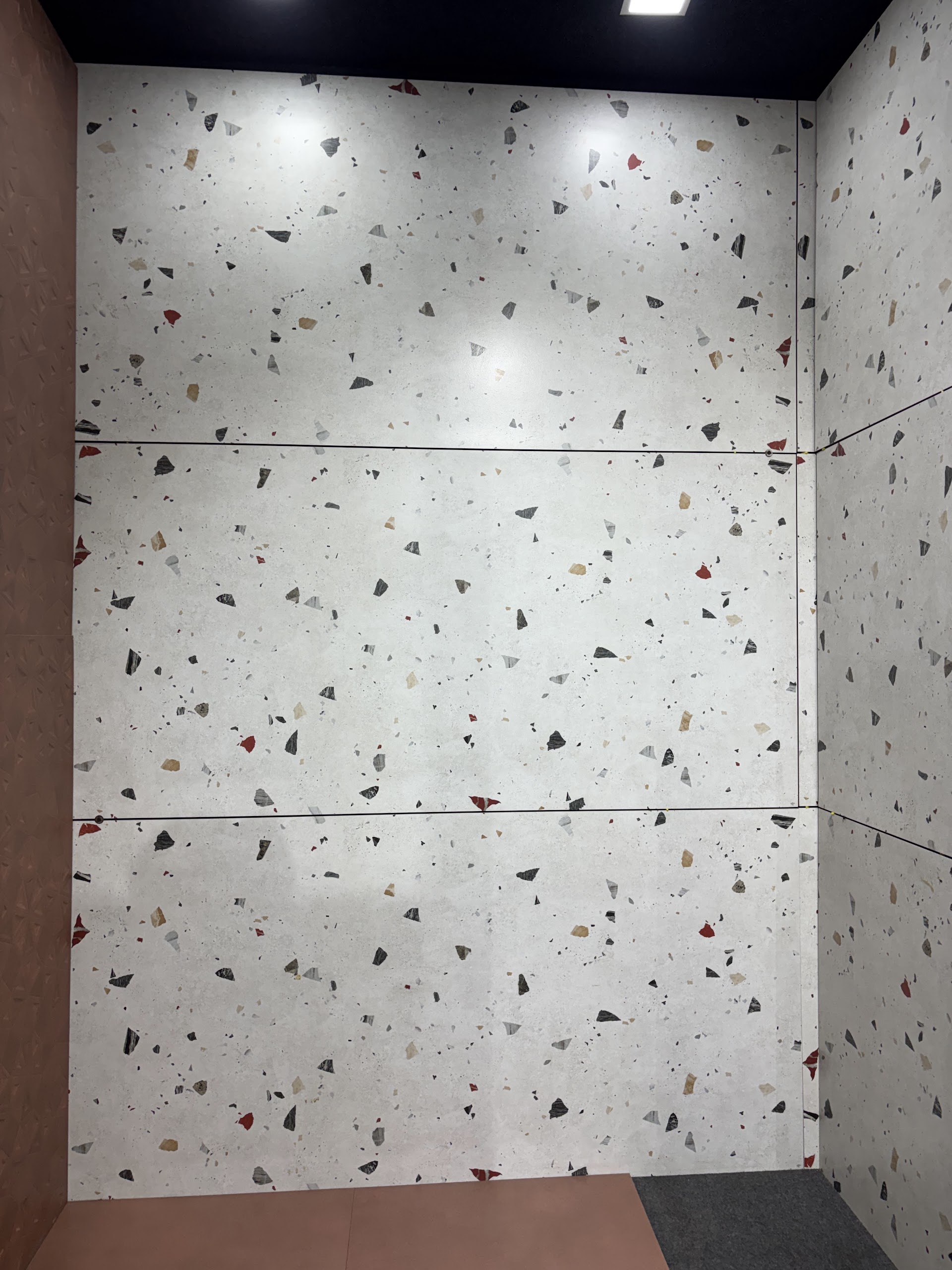
The scattered fragments in this terrazzo-finish display illustrate another reason to step back. From nearby, individual marks attract attention. Across a larger surface, their density and contrast become the more important qualities. Compare that overall effect with the room's other patterns rather than trying to match a single coloured fragment.
Notice the joints too. Their colour and position help determine whether the result reads as one surface or a grid of individual tiles. Ask about the intended joint width and compatible grout, then have the installer confirm the specification. Do not assume a rectified edge means tiles should be installed without joints.
Compare combinations, not four separate favourites
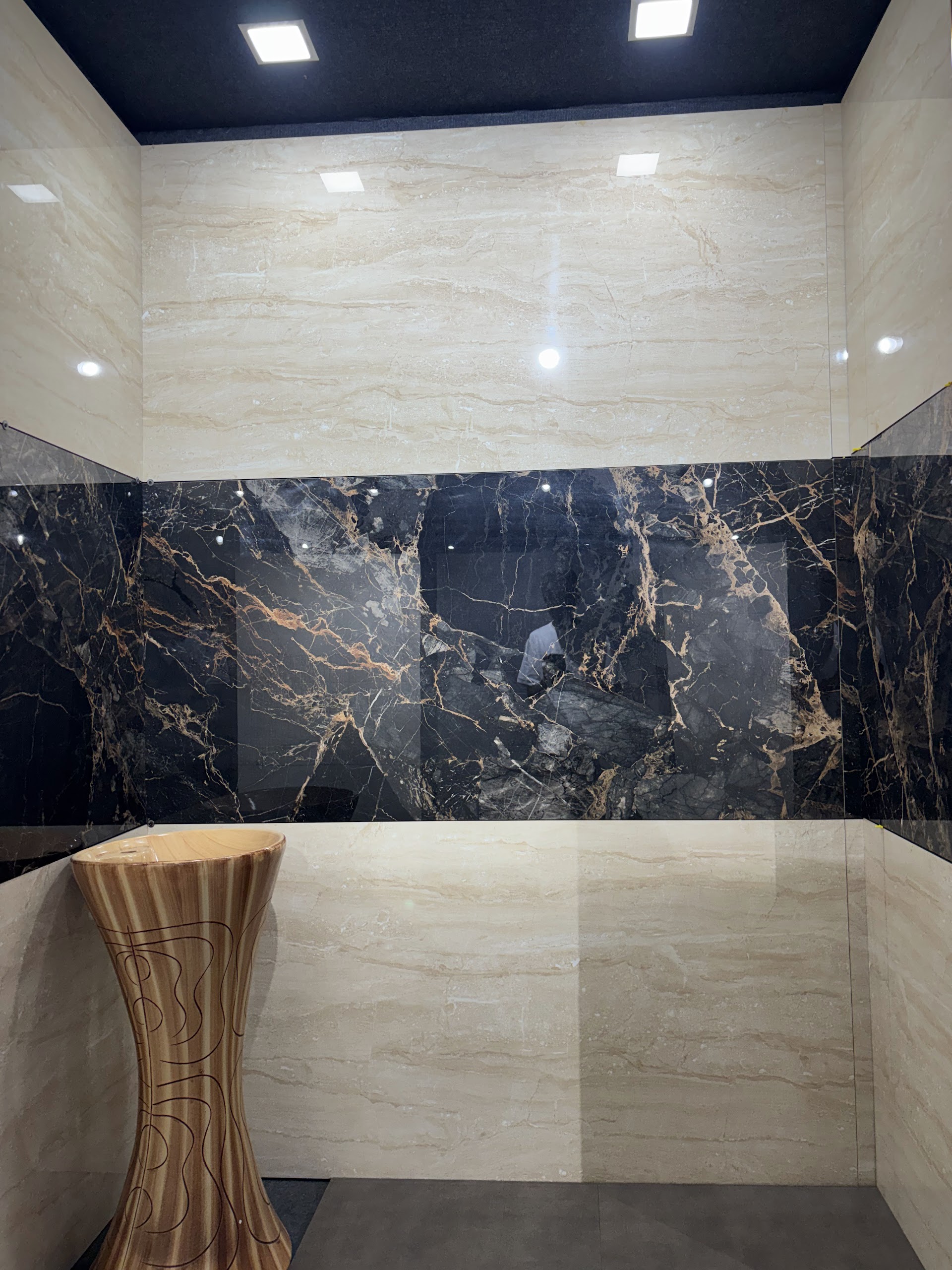
A tile can be attractive on its own and still compete with the adjoining surface. In the setting above, the dark veined band has a very different visual weight from the pale panels around it. The useful question is how much contrast your room needs, not whether both finishes deserve a place on the shortlist individually.
Put the floor, wall and fixed-finish samples together. Give one strong pattern a clear role and check whether the others support it. Look at the combination vertically and horizontally in their intended positions. If samples can be taken home, confirm the showroom's sample arrangements and compare them under the room's own lighting before final approval.
Keep a shortlist you can identify later
Limit the final comparison to two or three options per surface. Photograph each sample with its label, then record the product code, size and finish alongside the room where you intend to use it. Similar neutral tiles are easy to confuse once the visit is over.
| Record | Why it matters |
|---|---|
| Product code and finish | Identifies the exact option rather than a similar display |
| Tile dimensions | Allows the installer to review cuts and joint positions |
| Intended room and surface | Keeps floor and wall selections distinct |
| Technical suitability | Confirms approval for the actual application |
| Availability and delivery terms | Connects the selection to the project schedule |
Before the shortlist becomes an order
Have the installer review the measured layout before quantities are finalised. Cuts, direction and pattern matching affect the allowance for spare pieces. A single percentage applied to every room may not reflect the real layout, especially for diagonal arrangements or decorative compositions.
- Confirm the exact product code, size, finish and quantity in writing.
- Ask about matching batch arrangements and how shade variation will be checked.
- Review substrate preparation, adhesive, grout and joints with the installer.
- Confirm current stock, delivery timing and handling arrangements.
- Check the quotation, payment terms and applicable return or replacement conditions.
- Inspect the delivered boxes and tiles before installation begins.
A good showroom visit turns a broad visual preference into a specific, documented choice. Take time with the complete pieces, compare the combinations and carry the shortlist back to the room. Those checks are more useful than choosing the most striking panel under the brightest spotlight.
Frequently asked questions
What should I bring to a tile showroom visit?
Bring a measured room plan, photographs in daylight and with the lights on, and samples or accurate references for cabinetry, paint and other fixed finishes. Note which surfaces are being tiled and any practical requirements such as wet-area use.
Is a small tile sample enough to make the final choice?
A small sample is useful for comparing colour and texture, but it may not show the full pattern, face variation or joint layout. Ask to see complete tiles and several faces together before confirming the order.
Why does a tile look different at home?
Daylight, lamp colour, viewing angle and nearby finishes all affect its appearance. Compare the sample in the intended room and orientation, both during the day and under the final evening lighting where possible.
How many tile options should I shortlist?
Two or three clearly identified options per surface usually make comparison manageable. Record the product code, size and finish for each so similar-looking samples are not confused.
What details should be confirmed before paying?
Confirm the exact product code, size, finish, quantity, batch arrangements, approved application, availability and delivery terms in writing. Review the layout and installation requirements with your installer before finalising quantities.
Can a showroom display prove that a tile is suitable for my floor?
No. A display shows appearance, not approval for every application. Ask for the individual product's technical information and confirm suitability for the intended floor, wall, wet area or exterior location.
Bring your room plan and finish samples. Visit World of Tile in Sector 9, Noida to compare complete displays and discuss the exact products on your shortlist with the team. Confirm availability and application suitability before ordering.
Plan a showroom visit