
Tile Finishes and Lighting: How to Compare Samples for a Noida Home
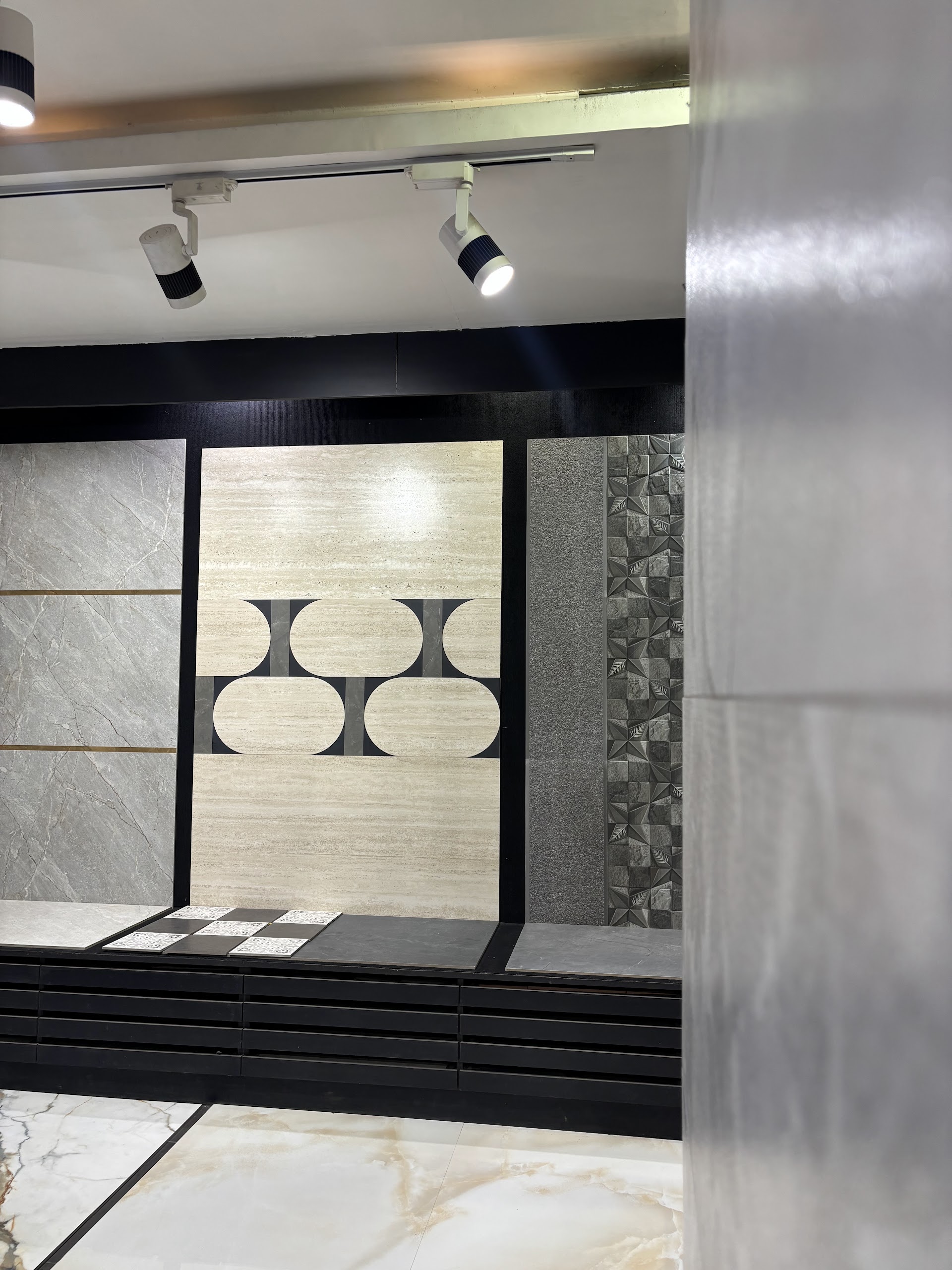
A tile that looks quiet under showroom lighting can appear highly reflective beside a sunlit window. A texture that looks subtle head-on may cast strong shadows beneath a downlight. For a Noida apartment or family home, choosing the finish and planning the lighting are parts of the same decision. These fresh photographs from our showroom photoshoot offer a starting point for a more useful sample comparison.
Begin with the room, not the finish label
Before choosing matt, polished or textured tiles, note where daylight enters the room, where you usually sit and which lights stay on in the evening. A living room with a large balcony opening presents a different situation from an internal passage or a bathroom with little daylight. Also consider the colour of nearby cabinetry, curtains and walls: they can change the way a tile's undertone is perceived.
Shortlist products for their intended use first, then judge appearance. A decorative wall tile should not be assumed suitable for a floor. Similarly, a surface that looks matt is not automatically suitable for a wet area. Our bathroom tile and anti-skid guide explains why product-specific suitability matters alongside the visual finish.
Compare matt and polished samples from everyday viewpoints
A polished surface can produce distinct reflections of windows and light fittings. That may suit the room you are planning, but check whether those reflections land in your line of sight from the sofa, dining chair or worktop. A matt surface generally softens sharp reflections; it does not guarantee that every colour will look calm or that the room will feel brighter.
Place floor samples horizontally and wall samples vertically where possible. Step back to the distance from which the finished surface will usually be seen, then move sideways to inspect the changing reflection. Do not rely only on a close-up photograph. Phone cameras adjust exposure and colour automatically, so the picture is a reminder, not a dependable colour match.
Let texture and light work together
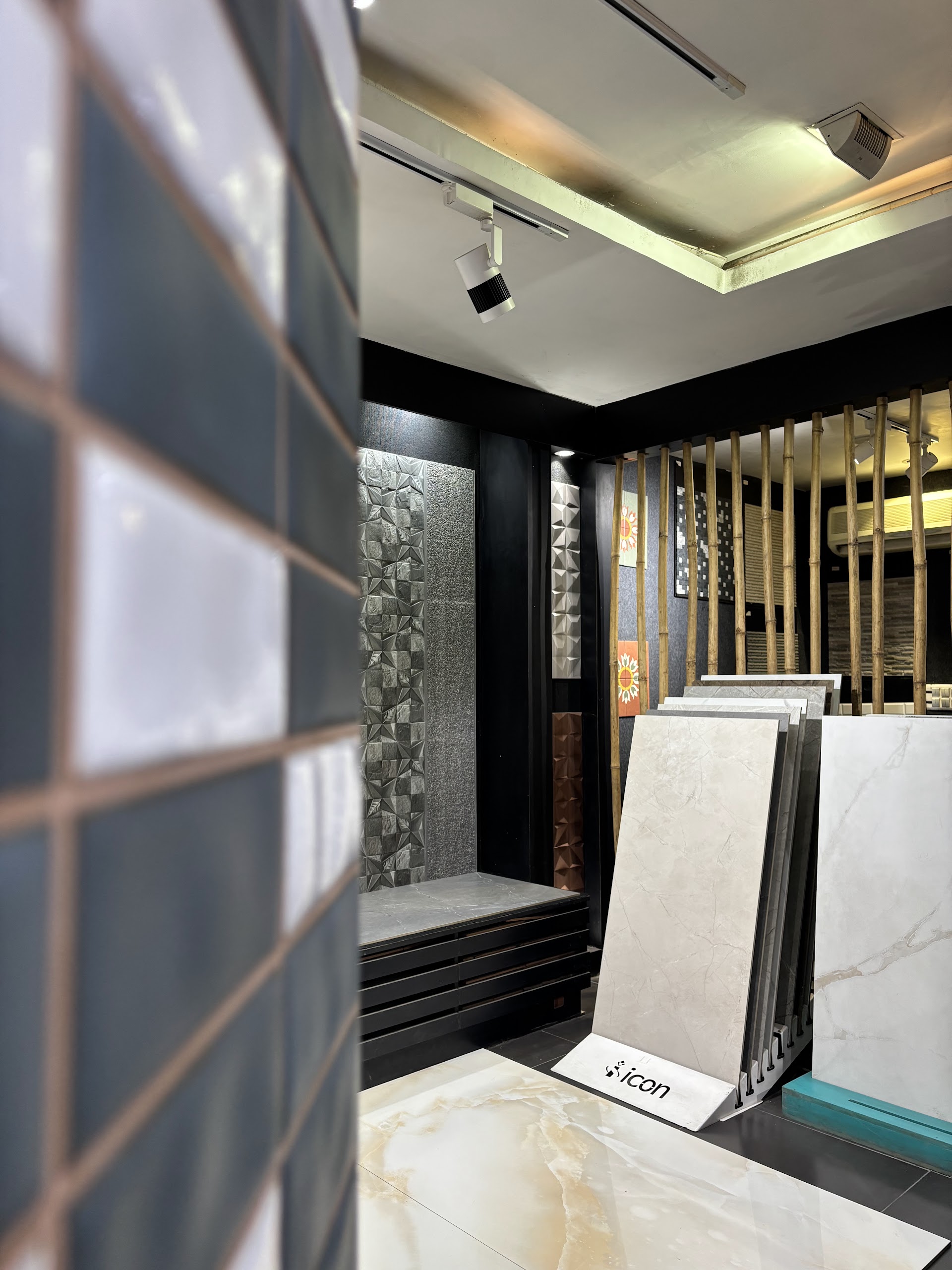
Light travelling close to a wall can emphasise relief, edges and shadows. More frontal, diffuse light may make the same texture appear softer. Before committing to a feature wall, ask your lighting professional to review the proposed fittings and positions with the actual tile sample. There is no single light-to-wall distance that works for every surface and fitting.
This matters for installation too. Strong grazing light may make small surface irregularities or tile-to-tile height differences more noticeable. Discuss substrate preparation, layout and the intended lighting with the installer before work begins, rather than trying to correct the appearance after the wall is finished. For more on choosing a restrained focal surface, see our feature wall texture and pattern guide.
Check several faces before choosing a pattern
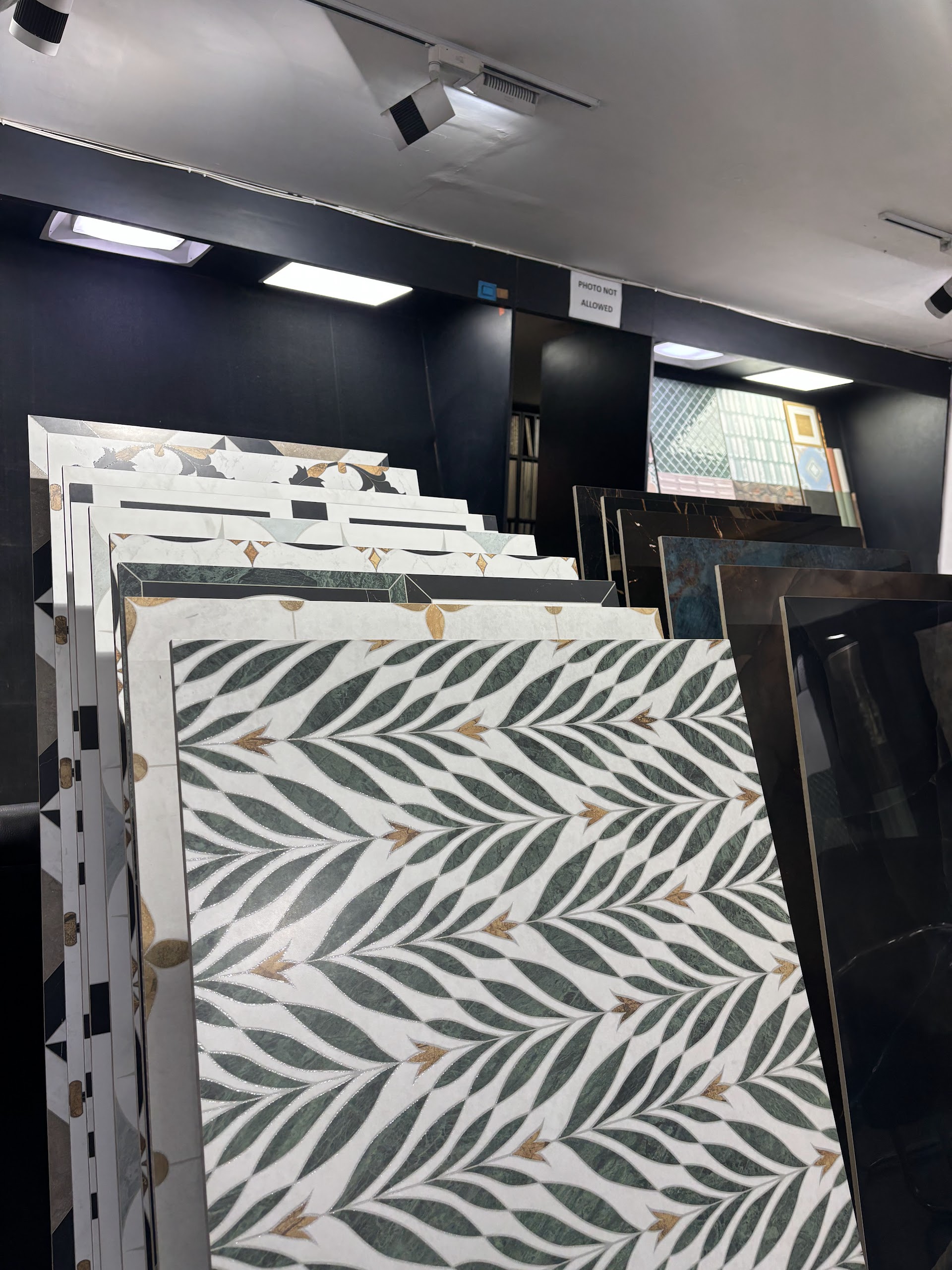
Patterned tiles and marble finish tiles need a broader comparison than one attractive piece. Ask to see multiple faces and check the expected variation for the exact product. Confirm whether motifs are meant to repeat, whether adjacent pieces create a continuous design, or whether the layout should intentionally mix different faces.
The Ceramic Tile Education Foundation's guide to preparing for tile shade variation is a useful independent reference for understanding why one sample cannot represent every piece in an installation. Keep the approved product reference and clarify the expected variation before placing an order.
A simple daylight and evening-light comparison
- Agree a shortlist. Compare exact product codes, finishes and intended uses, not just similar-looking colours.
- Use the correct orientation. Lay a floor sample flat or hold a wall sample upright, with permission and safe support.
- Check the actual room. If samples are available, view them beside the window and in a less brightly lit part of the space.
- Repeat under evening lights. Use the planned lamp colour and fittings where possible, rather than a different temporary bulb.
- Add surrounding materials. Put paint, cabinet or fabric samples beside the tile and inspect the whole palette.
- Record the decision. Note the product code, finish, size, expected variation and any installation questions that remain.
For a living room, pay particular attention to reflections near seating. In a kitchen, compare the tile with the cabinet finish and worktop under task lighting. In a bathroom, check the appearance alongside mirror lighting, but let wet-area suitability lead the floor choice. Our showroom sample checklist helps organise the measurements and material references to bring for these comparisons.
Confirm installation questions before ordering
Once the appearance is agreed, confirm the substrate, adhesive, joint plan and maintenance instructions with the installer and the product manufacturer. The Ceramic Tile Education Foundation's overview of the TCNA Handbook gives background on recognised tile installation methods. It is an industry reference, not a replacement for the exact product instructions or project-specific advice for your home in India.
The most useful comparison is not which sample photographs best under a spotlight. It is which approved product works for the room, looks right under the lighting you will actually use and can be installed and maintained as intended.
Frequently asked questions
Why does a tile look different at home than in the showroom?
Daylight, lamp colour, reflections and surrounding wall colours change how a surface appears. Compare an approved sample in the actual room during the day and under the lights you will use at night before ordering.
Are matt tiles always better for a bright room?
Not necessarily. A matt finish can reduce sharp reflections, but the right choice depends on the exact product, colour, room and intended use. Inspect the sample from normal sitting and standing positions rather than judging the finish name alone.
Does a matt finish guarantee slip resistance?
No. Appearance is not a slip-resistance rating. Ask for the manufacturer's product-specific suitability and slip-resistance information for the location, especially for bathroom floors and other wet areas.
How should I compare a patterned or marble finish tile?
View several faces together and confirm the expected shade and pattern variation. A single sample cannot show how repeated motifs or veining will read across a whole floor or wall.
Should I choose lighting before textured wall tiles?
Plan them together. Light directed along a wall can emphasise relief and shadows, while more frontal light can soften them. Ask the installer and lighting professional to review the sample and proposed light positions before installation.
What should I bring to a tile finish comparison?
Bring room photographs, measurements, cabinet or paint samples and details of the lighting you intend to use. Ask about sample availability and compare the shortlisted products in the actual space when possible.
Compare finishes in person. Bring room photographs, measurements and your material shortlist to World of Tile in Sector 9, Noida. Ask about viewing several faces and sample availability before finalising your selection.
Plan a showroom visit