
Tile Cleaning and Care: A Practical Guide for Noida Homes
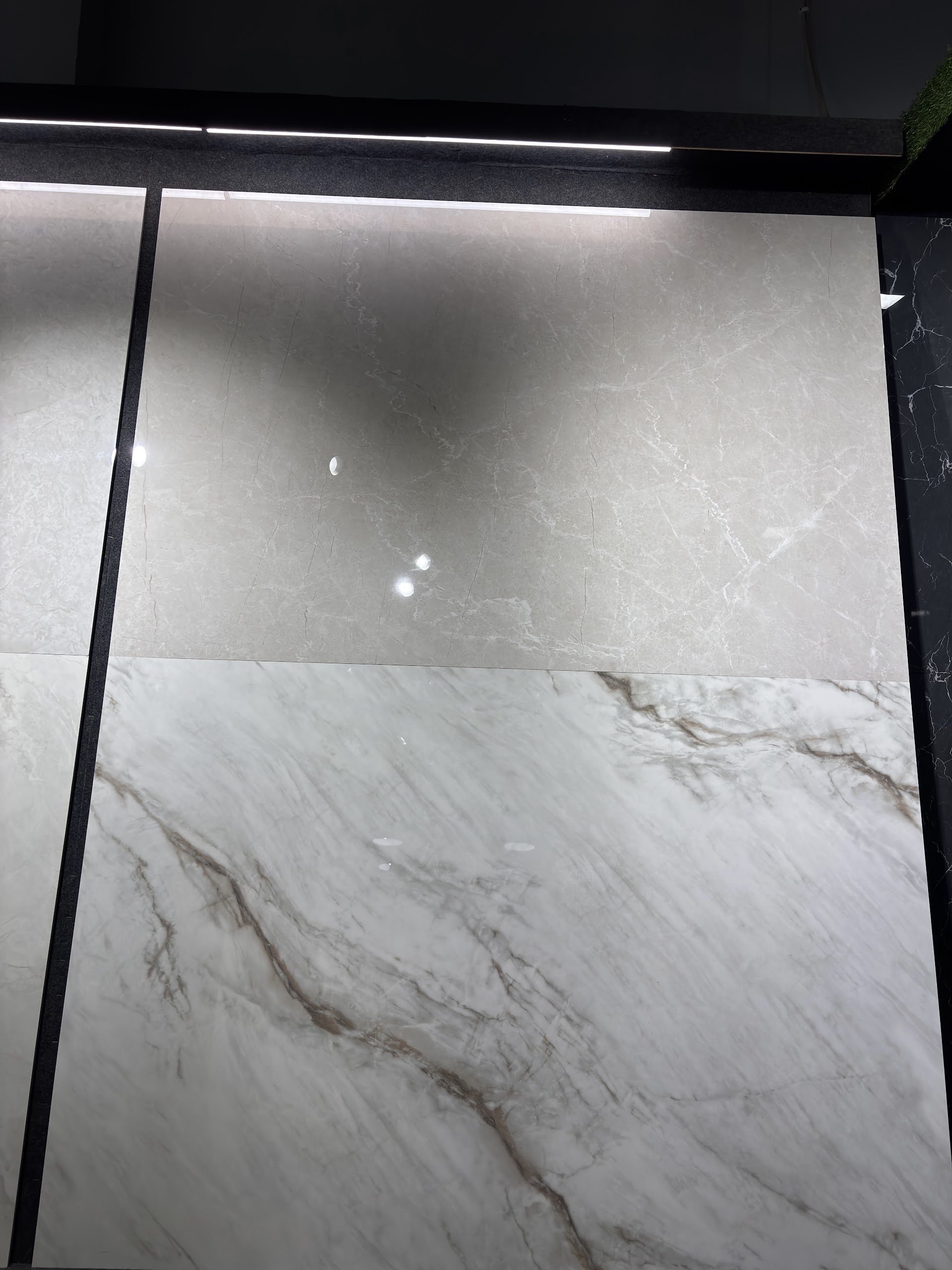
Choosing a tile is also choosing a surface you will live with every day. In a Noida home, dust carried through an entrance, kitchen spills and bathroom soap residue can each call for a different response. A good care routine starts with knowing the exact tile and grout, not buying the strongest cleaner. These fresh photographs from our showroom photoshoot illustrate finish choices, not cleaning demonstrations.
Start with the product, not its appearance
A glossy tile is not necessarily the same material as another glossy tile, and a marble finish tile is not natural marble. Keep the product code, finish and manufacturer's maintenance instructions after purchase. The same applies to decorative coatings, printed surfaces and any treatment supplied with the product.
World of Tile offers tiles with marble and wood finishes, not natural marble or wood. Do not transfer a stone polishing routine or timber-care product to a tile because the appearance is similar. If you are still deciding between tile materials, our guide to vitrified, porcelain and ceramic tiles provides useful background before you ask for the exact product's care sheet.
Build a simple routine around dust and residue
- Remove loose grit first. Sweep with a soft tool or use a suitable vacuum attachment before wet cleaning. Dragging grit across a surface can mark some finishes.
- Choose a compatible cleaner. Check that it is approved for both the tile and the installed grout. Follow the stated dilution rather than adding more concentrate.
- Use clean tools and water. A dirty mop or bucket can move soil from one part of the floor to another.
- Follow the rinse instructions. Where required, rinse with clean water and remove excess water rather than leaving a film to dry.
- Respond to spills promptly. Remove them with the product's approved method before they dry or spread into joints.
Daltile's ceramic and porcelain tile care guide explains why removing loose dirt, using appropriate dilution and rinsing matter. It is a useful manufacturer reference, not evidence that every tile in our showroom follows an identical care specification. The instructions for your selected product take priority.
Give textured surfaces a realistic care plan
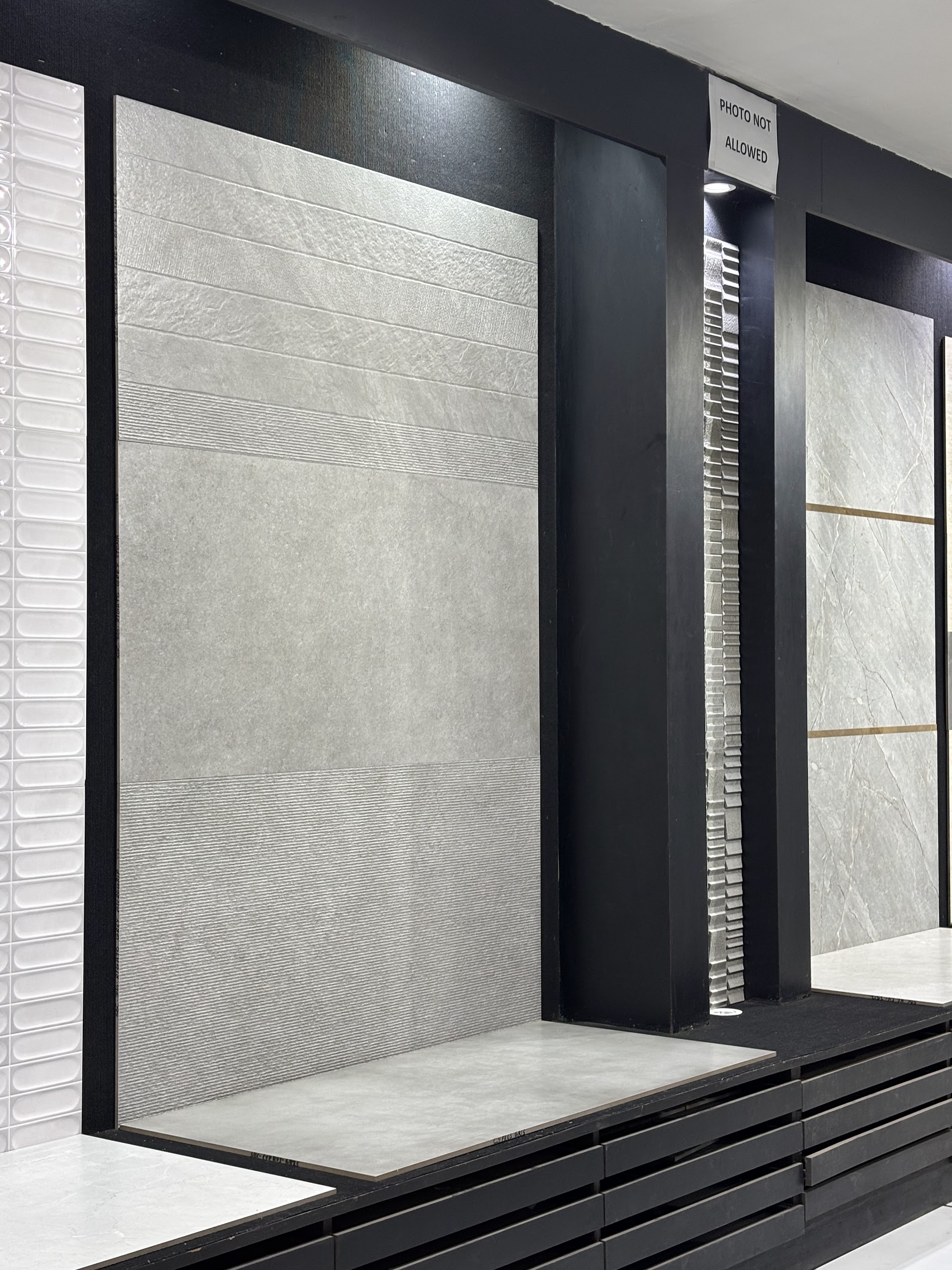
Texture changes more than the way light falls on a wall. Recesses and relief can make some surfaces less convenient to wipe than a flat panel. Before choosing a heavily textured tile beside a hob, basin or shower, ask about intended use and the approved cleaning tools. A soft brush may be appropriate for some products, but metal scouring pads and abrasive powders should not be treated as universal solutions.
Compare maintenance access alongside appearance. Can the surface be reached safely? Will a fitting obstruct wiping? Is the decorative finish suitable for the expected exposure? Our tile finishes and lighting guide helps assess the visual side of that choice; care instructions complete the comparison.
Tile and grout need compatible cleaning
A floor is an installed system, not just a collection of tile faces. The grout, sealant, metal trims and nearby fittings may react differently to a cleaner. Cementitious and epoxy grouts have different care requirements, and neither should be assumed maintenance-free. Soap or detergent residue on a joint is not necessarily a permanent stain, while a discoloured joint may need more investigation than another round of scrubbing.
Check the grout manufacturer's guidance before using stain removers or applying a sealer. If joints crack, remain damp or repeatedly discolour, ask the installer to investigate the cause rather than concealing the symptom. Our grout colour and joint-planning guide explains what to agree before installation, including the grout product and joint layout.
Avoid stronger-cleaner shortcuts

Do not mix cleaning chemicals. Do not apply an acid wash, bleach, wax or polish simply because a mark remains after mopping. A product may be unsuitable for the grout or an adjoining fitting even when the tile face seems unaffected. Follow safety, ventilation and protective-equipment instructions on any approved cleaner, and test only as the manufacturer directs in an inconspicuous area.
A cloudy new floor may have construction residue rather than everyday dirt. Identify whether the residue is cementitious grout haze, epoxy residue, adhesive or something else with the installer before treating it. Removal methods and timing depend on the installed products. Daltile's tile care and maintenance resource separates guidance by surface type, a useful reminder to avoid one cleaning recipe for every material.
Keep a maintenance handover with your order records
Before the installer leaves, collect the tile and grout references, care sheets and any specified sealing or curing instructions. Agree when the installation can first be cleaned and used, and keep a record of approved products. Use suitable entrance mats and furniture protection where the tile manufacturer advises them, without allowing dampness or dirt to accumulate underneath.
The aim is not to make the floor look freshly polished every day. It is to remove dirt without leaving residue or damaging the finish, and to recognise when a problem needs product-specific advice rather than a stronger cleaner.
Frequently asked questions
What is a sensible routine for cleaning porcelain floor tiles?
Remove loose dust and grit first, then use a cleaner approved for the exact tile and grout at its stated dilution. Follow the instructions for rinsing and remove excess water. Change dirty cleaning water rather than spreading it across the floor.
Can I use acid to remove marks or cement haze from tiles?
Do not use acid as a general remedy. A cleaner can damage grout, decorative finishes or adjoining fittings even if the tile itself tolerates it. Ask the installer and product manufacturer to identify the residue and specify a compatible treatment.
Do marble finish tiles need the same care as natural marble?
A marble appearance does not identify the material. Confirm whether the product is porcelain or ceramic and follow its own care instructions. World of Tile offers tiles with marble finishes; a natural-stone maintenance routine should not be assumed appropriate for them.
Does epoxy grout mean the floor needs no cleaning?
No. Dirt, soap and cleaning residue can collect on the surface of any joint. Use the grout manufacturer's approved cleaning method, and do not assume a product suitable for the tile is also suitable for the grout.
Should every tiled floor be sealed?
No. Sealing requirements depend on the exact tile, finish and grout. Some products may require a specified treatment while others do not. Ask for written product guidance before applying a sealer or polish.
What should I ask about maintenance before buying tiles?
Ask for the product code, finish, intended use, care instructions and any sealing requirements. Confirm the planned grout and discuss cleaning access for textured surfaces. Keep these records with the installer handover information.
Choose with everyday care in mind. Bring room photographs and your finish shortlist to World of Tile in Sector 9, Noida. Ask about the selected tile's maintenance instructions and discuss the planned grout with your installer before ordering.
Plan a showroom visit