
Pooja Room and Entrance Tiles: Art Panels, Textures and Traditional Motifs
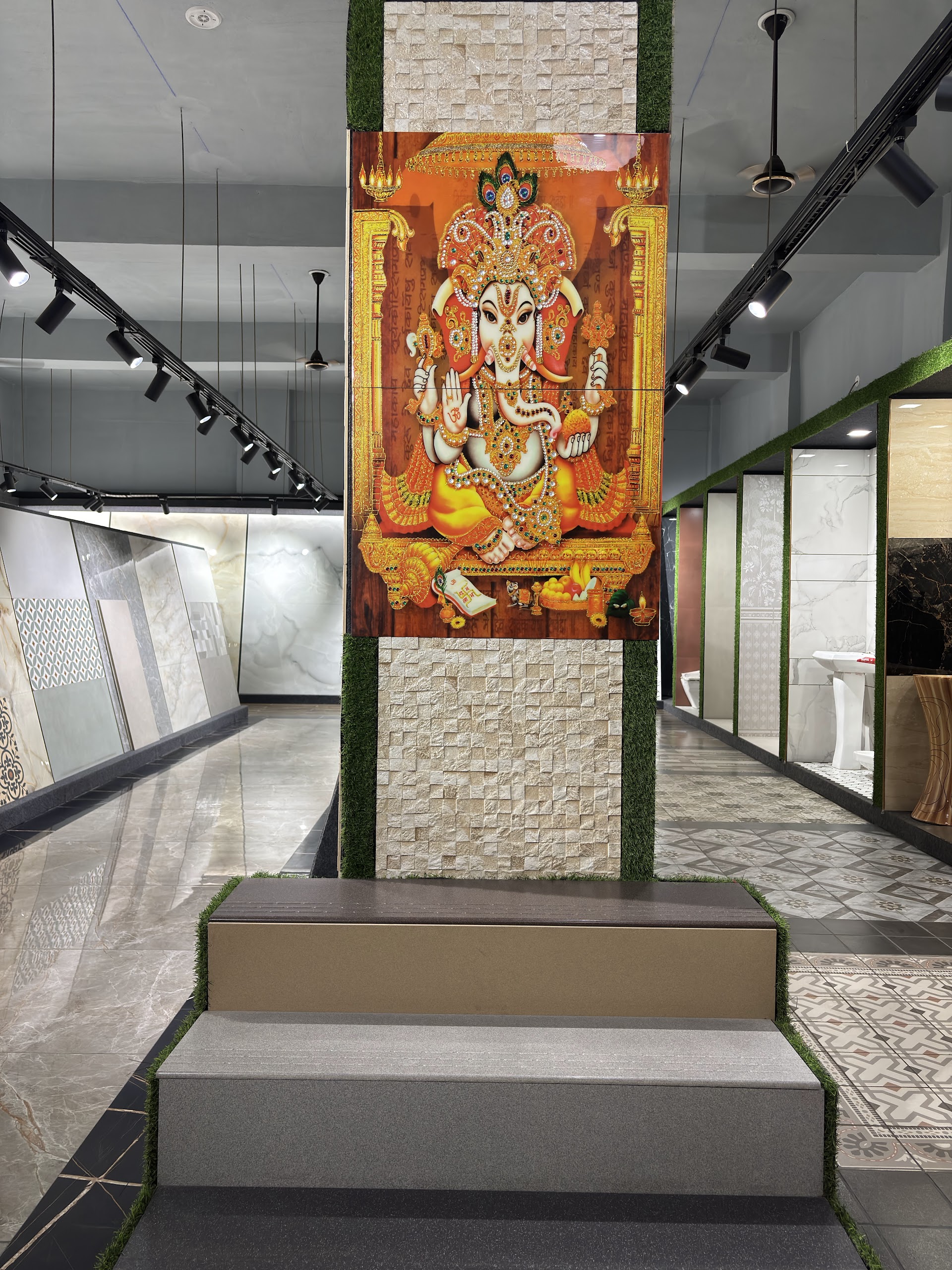
The pooja room and the entrance are small areas that carry a lot of meaning. They are often the first and the most personal surfaces in a home. Tiles here are chosen less for coverage and more for feeling. These photographs from our showroom photoshoot show four directions families often consider, along with the practical checks that help each one work in daily use.
Start with one focal element
A mandir wall usually reads best when one element leads. That might be a printed deity panel, a carved-look relief or a band of traditional motifs. Around it, a quieter tile in a related tone lets the focal piece stand out without competing for attention.
In the photograph above, the art panel sits within a light textured surround. The plain frame keeps the image legible from across the room. When planning your own wall, mark the centre line of the idol or shelf first, then position the panel so it aligns with it.
Pattern for a gentle, continuous backdrop
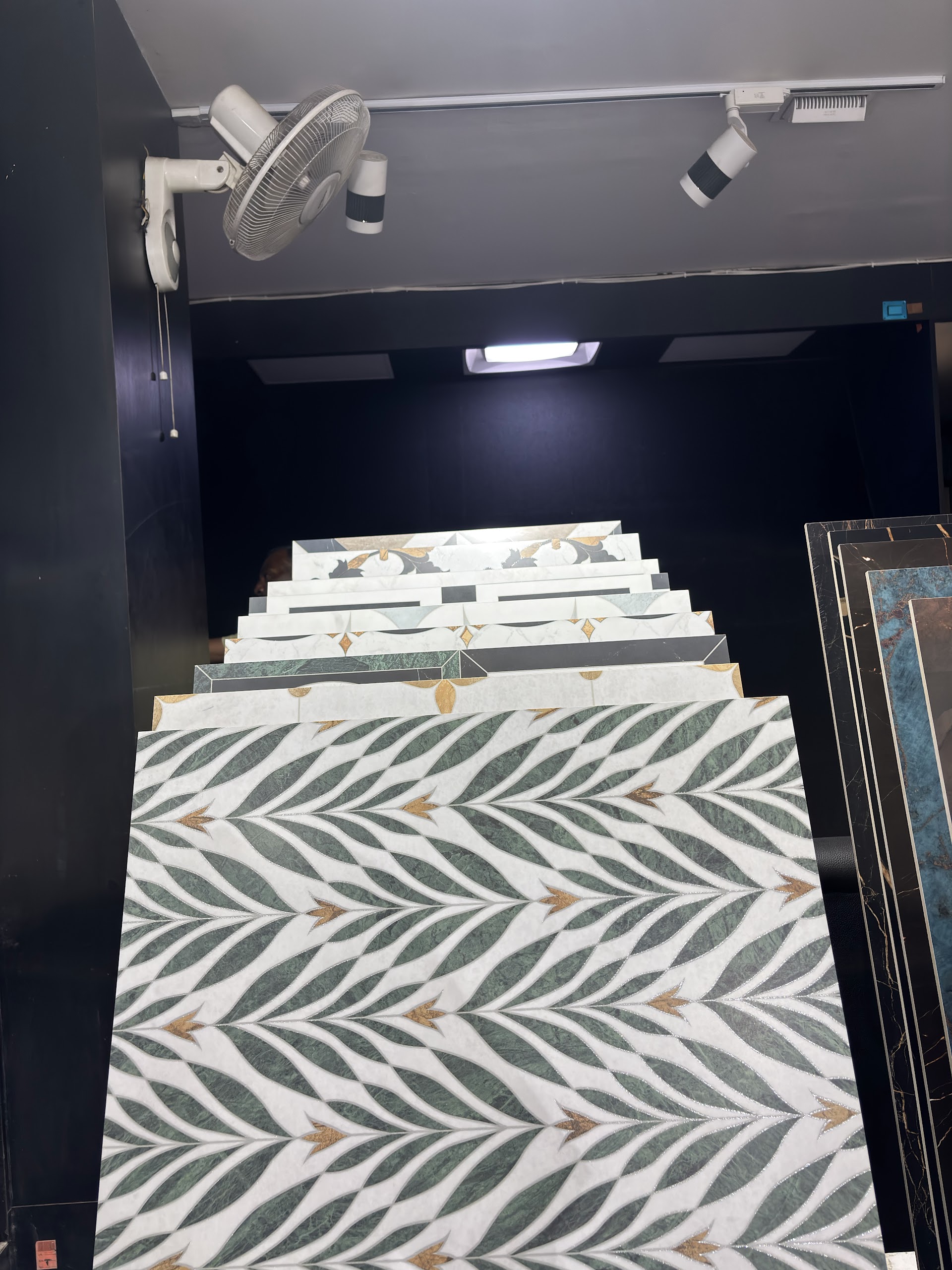
Not every family wants a figurative panel. A repeating botanical or geometric pattern can give the space a sense of occasion while staying calm. Look at several pieces laid together, since a pattern can feel very different across a full wall than on a single sample.
Check how the pattern meets corners, niches and shelves. Ask for a layout that avoids thin slivers at the edges, and consider whether the pattern should run on every wall or only behind the mandir.
Texture for the entrance foyer
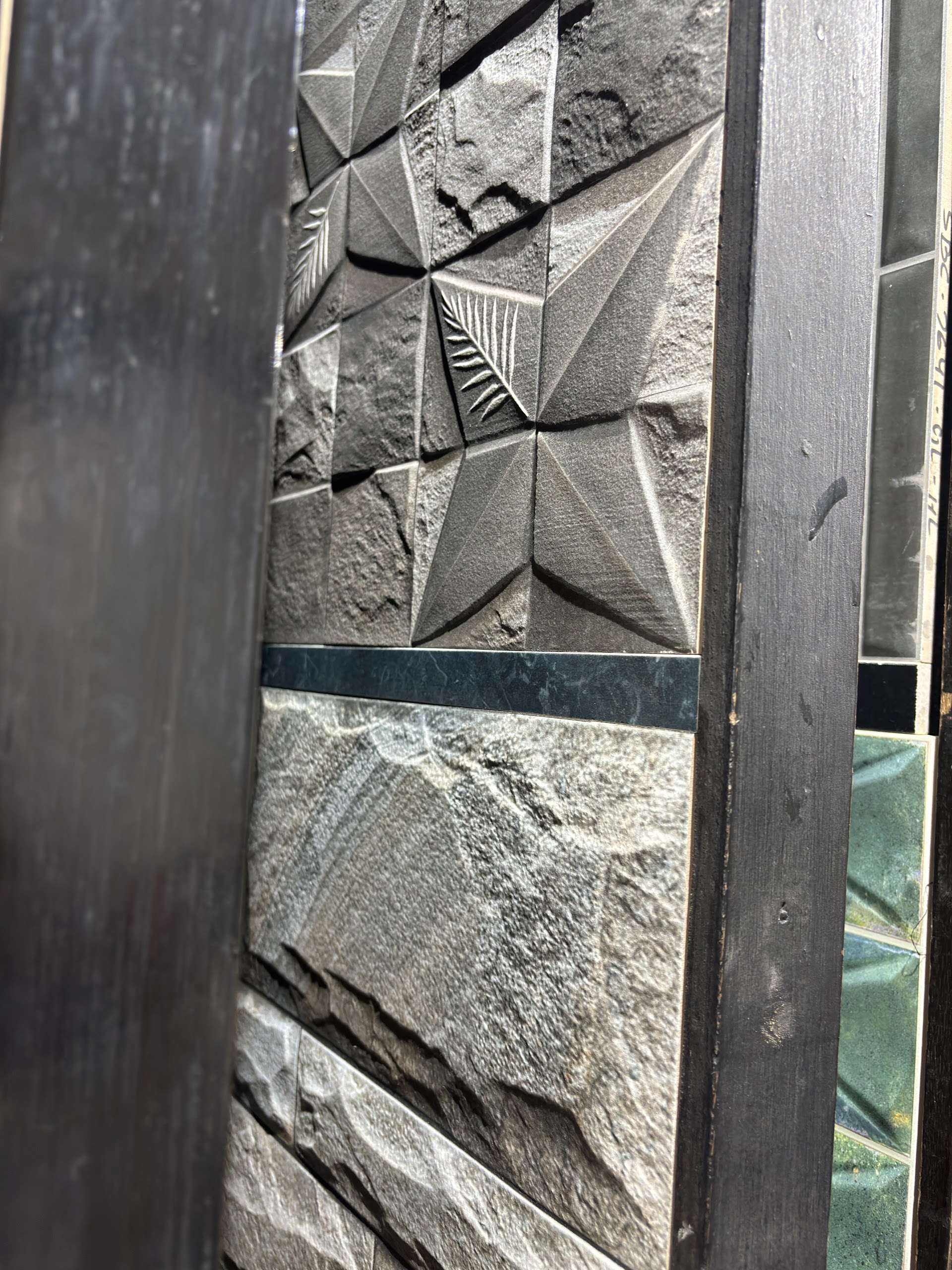
At the entrance, a textured wall can set the tone before guests step inside. Relief and split stone finishes respond strongly to lighting. A downlight or wall washer placed close to the surface brings out the shadows, while flat front lighting can make the same tile look plain.
Deep texture also collects dust, so use it where people will not brush past constantly. Confirm suitable adhesive and installation guidance for heavier or thicker pieces with your installer before ordering.
Traditional motifs with warmth
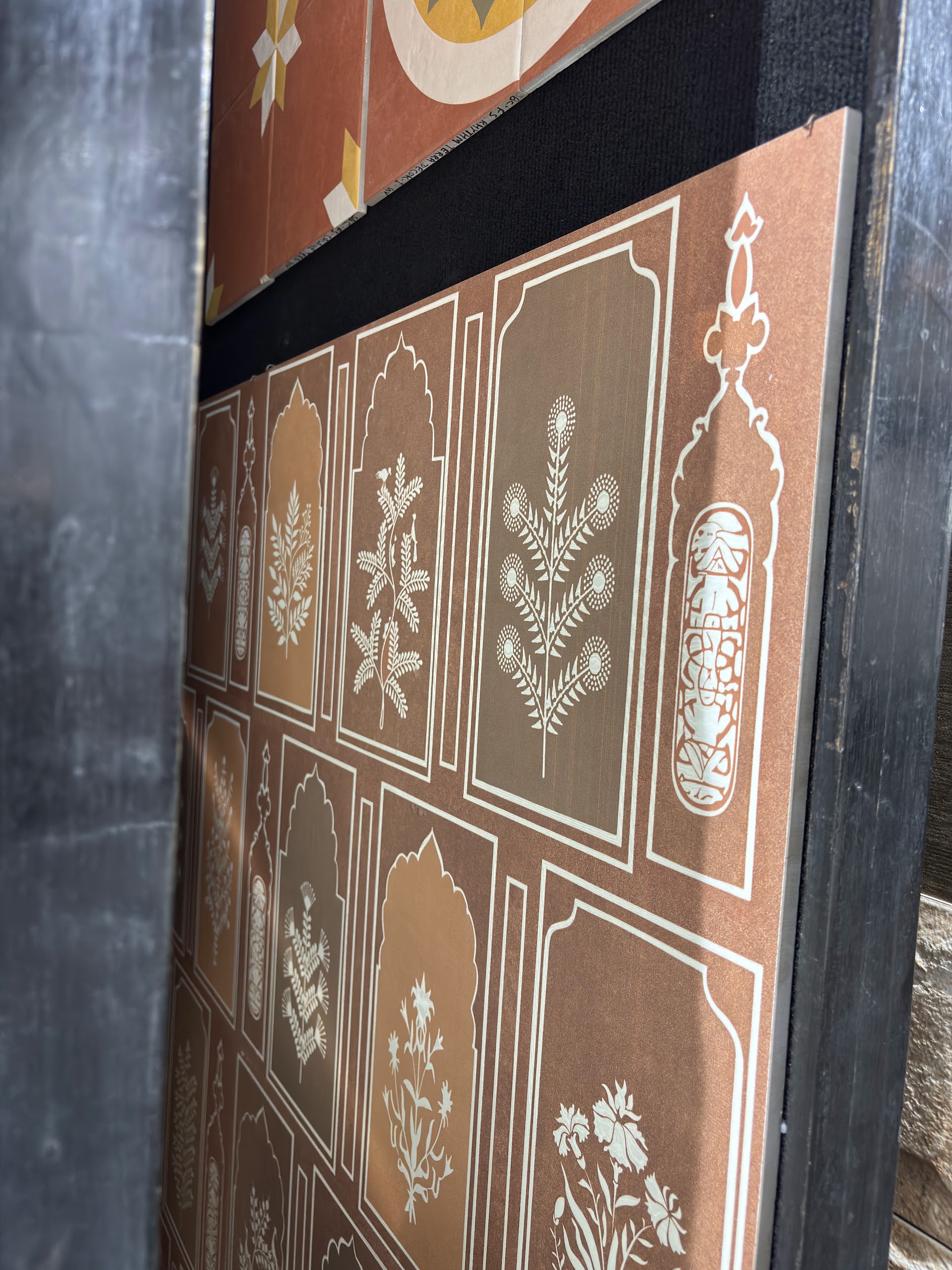
Arches, jaali-inspired forms and floral motifs bring a heritage feel that suits many pooja rooms. Warm terracotta and earth tones pair naturally with brass diyas and wooden mandirs. View these tiles under warm light, since cool white lighting can flatten their colour.
Practical checks before you decide
- Measure the wall and mark the position of the mandir, shelf or idol.
- Confirm the full layout of any multi-piece art panel.
- Choose a floor that cleans easily of oil, ghee and flower residue.
- Check slip resistance where water is used during rituals.
- Plan lighting to suit texture or pattern before tiling.
- Keep spare tiles from the same batch for future repairs.
A pooja room or entrance does not need many materials. One meaningful feature, a calm background and careful lighting usually create the most lasting result.
Frequently asked questions
Which tiles suit a pooja room wall?
Many homeowners choose a calm background tile with one feature element such as a printed art panel, a carved-look texture or a traditional motif. Compare the shortlist under warm lighting similar to diyas or lamps before deciding.
Are printed deity panels suitable for a mandir wall?
They can work well as a single focal panel when the print, size and finish are checked in person. Confirm the exact layout of the multi-piece panel and plan the surrounding tiles so the image is centred on the wall.
What floor tile is practical for a pooja room?
Choose a floor surface that is easy to clean of oil, ghee and flower residue, and check slip resistance where water is used for rituals. A matt or lightly textured finish is often easier to live with than a high gloss surface.
Can 3D textured tiles be used at the entrance?
Yes, as a feature wall where people will not brush against the surface constantly. Deep relief collects dust, so plan lighting that shows the texture and a cleaning routine that suits it.
Should the pooja room match the rest of the home?
It helps to link the pooja room to adjoining spaces through tone or one repeated material, even if the feature wall is more decorative. This keeps the space special without feeling disconnected.
Can I see these designs before buying?
Yes. Visit the World of Tile showroom in Sector 9, Noida to view art panels, textured surfaces and motif tiles in person, and bring your room measurements so the layout can be discussed.
See the panels and textures in person. Visit World of Tile in Sector 9, Noida with your wall measurements and photographs of the space. Our team can help you compare art panels, motifs and textured surfaces side by side.
Plan a showroom visit