
GVT vs PGVT vs Double Charge vs Full Body Vitrified: A Showroom Comparison
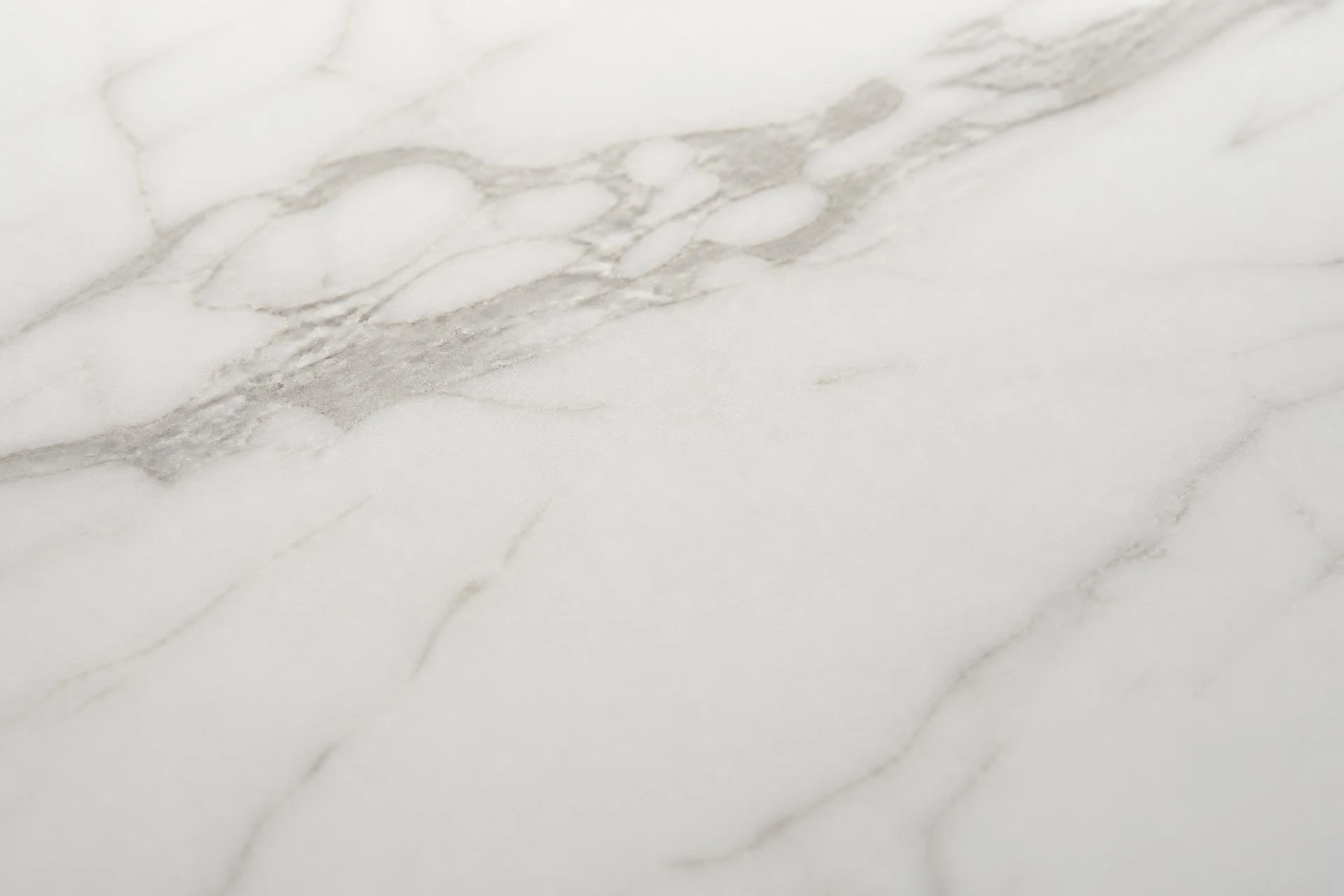
On a normal Saturday at the Sector 9 counter, the sentence we hear most after "show me big tiles" is "double charge is stronger, no?" It usually comes from a father who tiled his first flat around 2009 and is now doing his son's. He is not wrong, but he is answering a question that most rooms in a modern Noida flat no longer ask. The names on the boxes, GVT, PGVT, double charge, full body, nano and soluble salt, all describe how the top few millimetres of a vitrified tile are made, and that detail decides how the tile looks, how it wears, whether haldi marks it and what it costs. This is the comparison we give across the counter, along with the three tests you can do on a sample yourself.
Six names on the box, four ways of making a surface
Every product in this comparison shares the same body. A vitrified tile is pressed from a blend of clay, feldspar, quartz and silica, dried, and fired at around 1,200 degrees until the particles fuse into a dense, glass like mass that absorbs less than 0.5 percent water. That figure is what places the tile in group BIa under IS 13006, the Indian standard published by the Bureau of Indian Standards in line with ISO 13006, and it is the same whether the carton says GVT or full body. If the body is the same, the difference has to be in what sits on top of it, and that is where the names come from. Our earlier post on vitrified, porcelain and ceramic tiles deals with the body itself. This one is about the surface.
GVT: glazed vitrified tiles
A GVT begins as a plain vitrified biscuit. Before firing, a layer of glaze, essentially a glass forming slurry, is sprayed across the face, and a digital inkjet printer lays the design onto that glaze in ceramic inks. A transparent protective glaze usually goes over the print. Everything is then fired together so the glaze fuses to the body. The colour and pattern end up in a skin well under a millimetre thick, printed at a resolution that can reproduce marble veining, oak grain, rusted steel or trowelled cement with real variation from tile to tile. That is the whole appeal. The design range is close to unlimited, and the same process produces matt, satin, sugar, carved and structured finishes. Nearly everything in our wood look and concrete look ranges is GVT.
PGVT: polished glazed vitrified tiles
A PGVT is a GVT whose glaze has been polished after firing. The glaze is formulated to take a shine and applied a little thicker, because the polishing line grinds away a fraction of it on the way to a mirror finish. Lappato, or semi polished, is the same process stopped early, leaving glossy highs over matt lows. What you get is the full design range of GVT with the reflective, marble like gloss that Indian living rooms have asked for since the 1990s. The trade off is that polished glaze is the softest surface in this comparison, and a mirror shows every hairline scratch a matt glaze would hide. PGVT in 600x1200 and 800x1600 is the biggest seller in Delhi NCR by volume, and deservedly, but it should be understood as a finish rather than a strength grade.
Double charge: two layers of pressed colour
Double charge, also sold as dual charge or double loading, is a different idea altogether. Instead of printing on top, the press is fed with two layers of coloured body powder. The base is a standard biscuit; the top layer, typically 3 to 4 mm thick, is a blend of pigmented granules that forms the pattern. The two are pressed together at high pressure, fired as one piece and then polished. Because the design is made of coloured body material rather than ink, it runs 3 to 4 mm deep and cannot wear off in any realistic domestic lifetime. The limitation is that a press feeding granules cannot draw a Calacatta vein or a plank of teak. Double charge designs are speckled, cloudy or streaky, and the palette is the ivory, cream, grey and beige family every Delhi builder floor has carried since 2010. Sizes are mostly 600x600 and 800x800, with some 600x1200.
Full body: colour through the whole tile
Full body, also called through body or homogeneous, takes the same logic to its end. Pigment is mixed into the entire body before pressing, so the colour is identical from the top face to the underside. A chip, a deep gouge or ten years of trolleys in a shop exposes the same shade that was on the surface. Full body tiles come in plain colours, salt and pepper speckles and a small number of stone effects, in matt, structured and polished versions. They are the standard specification for airports, metro stations, hospitals and factory floors, and the 20 mm pavers on our outdoor and terrace displays are full body as well. In a home they are the right answer in a small number of places, which we come to below.
Soluble salt and nano polish: the older technologies
The two older methods are still on the market at the lowest price bands, and they are where most of the disappointment stories we hear begin. Soluble salt tiles are plain vitrified biscuits screen printed with metallic salt solutions that soak a millimetre or so into the surface and develop colour on firing, after which the tile is polished. The design vocabulary is a handful of soft focus marble and granite patterns, and because the colour penetrates only a little way, heavy traffic eventually rubs the pattern pale along the walking line. Nano polished tiles are usually soluble salt tiles given a final coating of nano silica that fills the microscopic pores opened by polishing, so the surface stains less and shines more when new. The coating is a surface treatment, not a change to the tile, and it is the first thing to go.
The comparison, property by property
The table below is how we set these products against each other for a family renovating a three bedroom flat. Hardness figures are on the Mohs scale, where a steel key sits around 5.5 and quartz sand, the thing that actually scratches floors in Delhi, sits at 7. Prices are Noida material only, before GST at 18 percent and before adhesive and labour, and they move with the Morbi factories and the season, so treat them as bands rather than quotes.
| Property | GVT | PGVT | Double charge | Full body | Soluble salt and nano |
|---|---|---|---|---|---|
| Design range | Near unlimited, digitally printed | Near unlimited, printed then polished | Speckle, cloud and streak in a narrow palette | Plain colours, speckles, a few stone effects | A few soft marble and granite patterns |
| Scratch and wear | Glaze around Mohs 5 to 6; matt hides marks | Polished glaze around Mohs 4 to 5; mirror shows marks | Coloured body around Mohs 7; 3 to 4 mm wear layer | Same colour to full depth; Mohs 7 or higher | Pattern 1 to 2 mm deep; wears pale in traffic |
| Slip when wet | Matt and structured from R9 to R11 | Polished, slippery when wet | Polished, slippery when wet | Matt and structured up to R11; polished versions slippery | Polished, slippery when wet |
| Stain resistance | Sealed glaze, very good | Very good on full polish; lappato needs care | Polishing opens micro pores; haldi and hair dye can mark | Matt is very good; polished behaves like double charge | Weakest; depends on a coating that wears |
| Thickness | 8 to 10 mm | 9 to 10 mm | 9 to 10 mm | 9 to 12 mm; 20 mm for outdoor | 8 to 9 mm |
| Common sizes (mm) | 600x600 up to 1200x2400 | 600x1200, 800x1600, 1200x1200, 1200x2400 | 600x600, 800x800, 600x1200 | 300x600, 600x600, 600x1200 | 600x600 mainly |
| Price band, Noida (Rs per sq ft, moves) | 40 to 100 | 50 to 220 by size | 38 to 75 | 55 to 120 | 28 to 45 |
| Best rooms | Bedrooms, bathrooms, kitchen walls, balconies | Living, dining, formal areas, feature walls | Rentals, staircases, parking, service areas | Shops, showrooms, ramps, terraces, entrances | Store rooms and low use spaces |
Two things stand out once the numbers sit side by side. First, the softest surface and the most beautiful surface are the same product, PGVT, which is why the fittings around it, doormats and felt pads, matter more than the tile grade. Second, the strongest surfaces, double charge and full body, are the ones with the least to say visually, which is why they belong in rooms where nobody is looking at the floor. Our Noida price guide adds adhesive, grout and labour on top of these bands.
How to identify each one at the counter
Names on cartons in Delhi NCR are not always reliable, and a polished double charge and a PGVT in the same cream tone can look identical from standing height. Three quick checks settle it, and any showroom that objects to them is telling you something. Ask for a loose sample rather than judging the display board, and take it to the door where the light is honest.
Look at the edge
Turn the sample on its side. A GVT or PGVT shows a very thin skin, glossy or matt, sitting over a plain body that is usually greyish white or buff. The skin is the glaze, and it is thinner than a fingernail. A double charge shows a clearly separate coloured band 3 to 4 mm deep over a differently coloured base, often with a visible line where the two powders met. A full body is one colour from top to bottom with no line at all. A soluble salt tile looks like a plain body with a faint tint fading out within the first millimetre or two. If you run a thumbnail down the edge, the step between glaze and body on a GVT is also easy to feel.
Drop some water
Put a few drops on the face and wait five minutes. On any sealed glaze the drop sits as a bead and wipes away leaving nothing. On a polished double charge, a polished full body or an uncoated soluble salt tile, the polishing has opened tiny pores in the body, and the drop may spread slightly and leave a faint darker patch that takes a while to lift. That patch is the same mechanism by which haldi, hair dye or a leaking pickle jar marks a floor, so it is worth knowing before the tile goes into a kitchen. A nano coated tile beads water when new, which tells you the coating is there, not that the tile beneath it will.
Try a scratch
Use the point of a steel key or a coin with a firm stroke on a corner of the sample. On a PGVT you will usually see a fine grey mark; some of it is metal transferred from the key and rubs off, but on a mirror polish a faint line often remains. On a matt GVT the same stroke leaves metal on the glaze and rubs clean. On a double charge or a full body the key does nothing at all, because the body is harder than the steel. This is the fairest version of the test. Some counters use a nail or a blade and claim a result either way, which proves nothing except that steel is softer than fired ceramic.
Common misconceptions in the Indian market
The one we hear most is that double charge is the strongest tile and therefore the best. It is the hardest wearing of the common domestic tiles, but strength is only useful where it is tested. In a bedroom where the traffic is two people in slippers, a glaze rated at Mohs 5 will outlast the furniture. Meanwhile the family has given up a marble look for a speckle they did not really want. The father from the opening paragraph usually agrees with this once he has seen a 600x1200 PGVT and an 800x800 double charge laid next to each other in the living room display.
The second is that PGVT and double charge are two names for the same thing. They are not related. One is printed and glazed, the other is pressed from coloured powder, and the edge test above shows the difference in seconds. A close cousin of this confusion is the belief that "nano" means a nanotechnology tile. It refers to a silica coating a few microns thick applied on top of a polished soluble salt tile, and it wears in the same years that the coating on a non stick pan does.
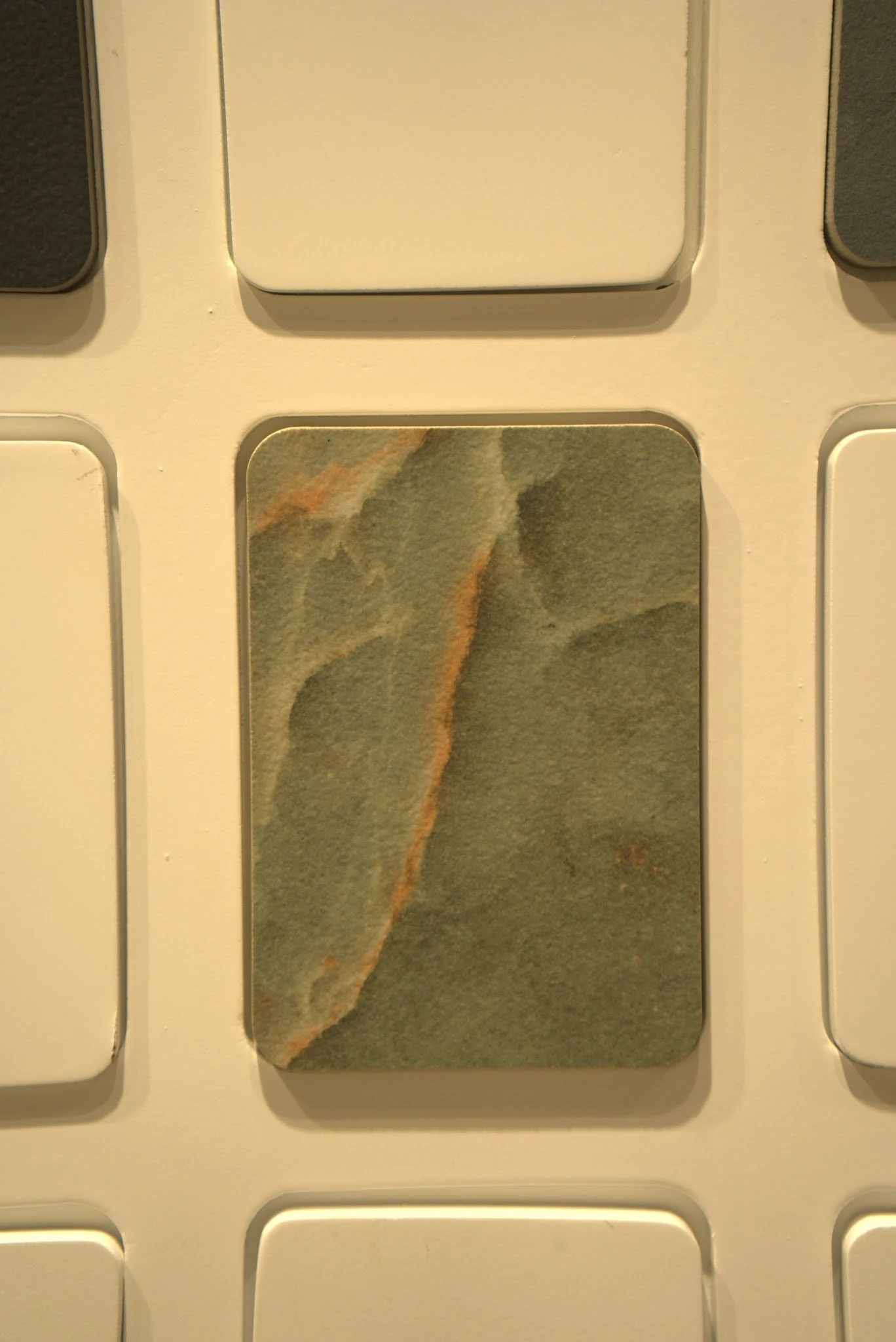
The third is that full body is always better because "the colour goes all the way through". It is better where chipping is a real risk, such as a stair nosing, a shop entrance or a terrace. In a flat, the tile that chips is the one under a dropped pressure cooker, and a chip in a printed marble look GVT can be filled with a matching epoxy in a way a speckled full body cannot, because the speckle never quite matches. The fourth is that thicker means stronger. Between 8 and 10 mm the body density matters far more than the millimetre, and thickness in a vitrified tile is chosen for size and handling rather than for durability. The fifth, and the most expensive, is that price alone tells you the type. A polished double charge from a good Morbi plant can cost more than a basic PGVT, and a premium PGVT in 800x1600 costs more than either, so the edge, not the invoice, is what to read.
Where large format porcelain and Nexion sit
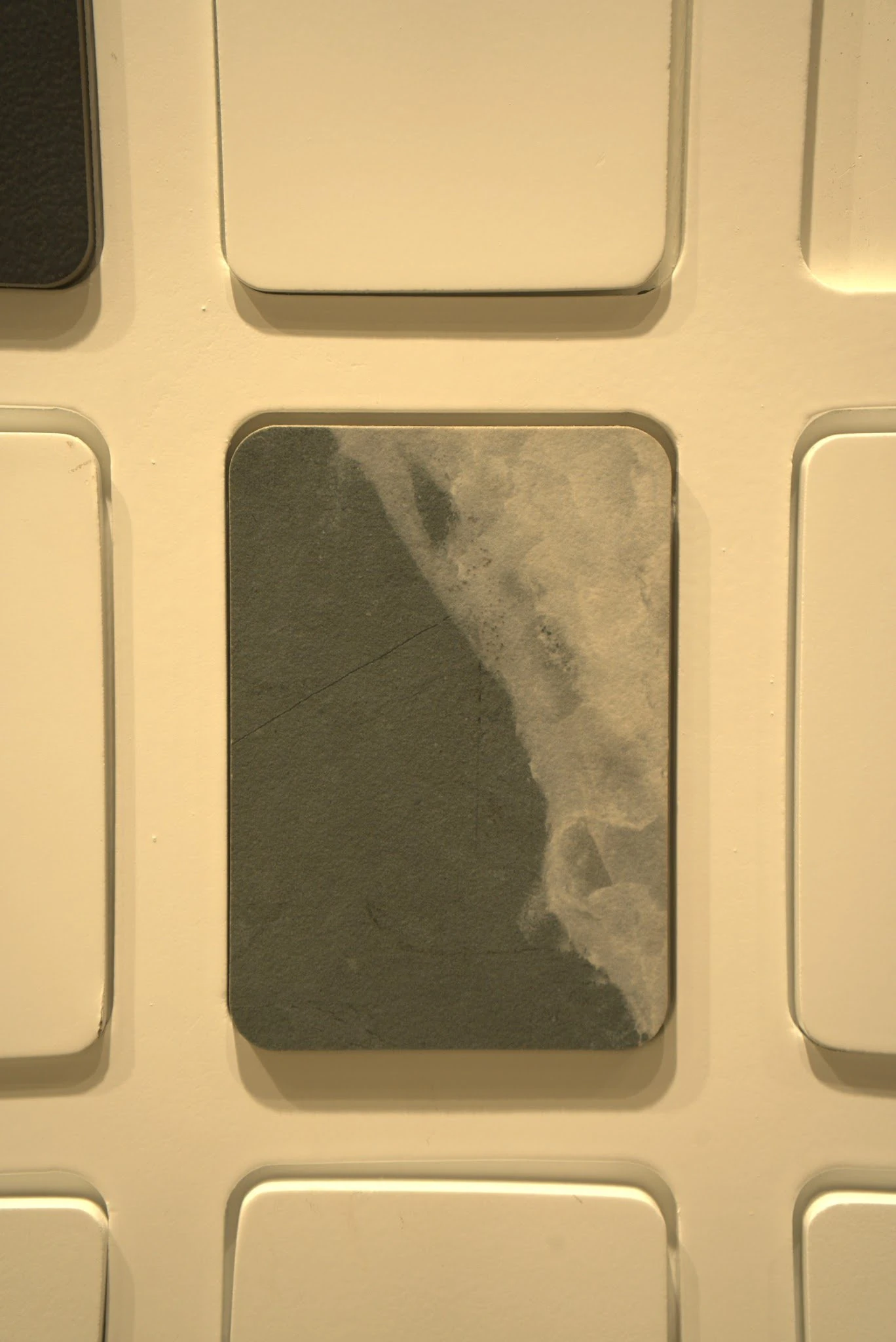
Everything above lives in the 600x600 to 800x1600 world that most of the Indian market buys. Above it sits a separate tier that borrows the best of both approaches. Large format technical porcelain, the category Nexion belongs to, uses a denser, more finely milled body with water absorption close to 0.1 percent, pressed in sizes up to 1200x2400 mm and 1600x3200 mm at thicknesses from 6 mm for walls to 12 mm for floors and countertops. The design is digitally printed, so the range covers Calacatta, Statuario, travertine, limestone, oxidised metal and cast concrete with book matched veining across a whole wall. At the same time, the better slab lines tint the body to sit close to the face colour, so an exposed edge on a mitred counter or a step does not read as a white stripe the way a GVT edge does.
The result is a surface that is harder than PGVT, more stain resistant than a polished double charge, and better looking than either, with joints at 2.4 metre intervals instead of 600 mm. The price reflects that. Slabs from Nexion and comparable imported ranges run from roughly Rs 250 to 600 per sq ft and above for material, before the adhesive, levelling and labour that a slab job needs, all of which we set out in our post on large format tiles, their pros and cons. For a living and dining area above 250 sq ft, a kitchen counter, or a bathroom wall that will be looked at every day, that money buys a floor that reads as stone rather than as tiles. For a bedroom or a corridor it buys very little that a good 600x1200 GVT would not, and we say so.
How to choose: by room, then by budget
Start with the room and how it is used, then let the budget pick within that answer, never the other way around. For a living and dining room, the surface people want is glossy marble, so the choice runs from a 600x1200 PGVT at the entry level, through 800x1600 PGVT for rooms over 150 sq ft, to a large format slab from our large format collection once the budget passes roughly Rs 250 per sq ft for material. Double charge belongs here only if the budget is under Rs 50 per sq ft and the room is a rental, in which case an 800x800 in a light cloud pattern is the sensible buy.
For bedrooms, a matt or satin GVT in a wood or soft stone look at Rs 45 to 80 per sq ft is the right answer at almost every budget. Feet are bare, traffic is light and gloss under a bed shows dust. For bathroom floors, the surface must be matt or structured with an R10 or R11 rating regardless of what it is called, which in practice means a GVT or a matt full body; polished anything, including PGVT and double charge, goes on the walls only. For a kitchen floor, a matt GVT or a lappato PGVT in a mid tone hides the daily traffic of a working kitchen; keep polished double charge out of the cooking zone because haldi finds the pores. The kitchen wall behind the hob can be a PGVT or a slab, since it is wiped rather than walked on.
For balconies, terraces and the entrance to a builder floor, choose a structured GVT rated R11 or a 20 mm full body paver, and for a staircase in a house with children, a full body or double charge with a machined anti skid groove at the nosing earns its cost. For a shop, clinic or office, the answer is a matt full body or a lappato full body in the traffic lanes and a PGVT or slab in the reception, which is the split most of our commercial clients settle on. In every case, confirm the type by the edge, confirm the slip rating on the technical sheet, and take a sample home to see it under your own light before ordering, because a tile that looked warm under showroom LEDs can go cold in a north facing Noida flat.
Frequently asked questions
What is the difference between GVT and PGVT tiles?
Both are vitrified tiles with a printed glaze on top. GVT is left matt, satin or textured after firing. PGVT has a glaze formulated to take a shine, which is then polished to a mirror or lappato finish. The design range is identical; the difference is gloss, slip when wet and how visibly the surface scratches.
Is double charge better than GVT?
Double charge has a harder, deeper wear layer, so it outlasts a glaze in a shop or on a staircase. In a home the glaze on a good GVT never wears through, so the practical difference is design. GVT offers marble, wood, stone and concrete looks; double charge offers speckled and cloudy patterns in a narrow palette.
Which vitrified tile is best for a living room?
For most Noida living rooms, PGVT in 600x1200 or 800x1600 gives the marble look and gloss people want at a sensible price. Above roughly Rs 250 per sq ft, large format porcelain slabs such as Nexion give the same look with fewer joints. Double charge suits a living room only when the budget is tight and the look is secondary.
What are full body vitrified tiles used for?
Full body tiles carry the same colour through their entire thickness, so chips and heavy wear do not expose a different shade. They are specified for shops, showrooms, hospitals, metro stations, ramps and terraces, and the 20 mm outdoor pavers are full body too. In a flat they suit a driveway, a stair or a heavily used entrance.
Are nano polished tiles good for a home?
Nano polished tiles are usually soluble salt tiles with a silica coating that fills the pores opened by polishing. They are the cheapest polished floor available and are fine for a store room, a rental or a low use space. The coating wears with traffic, the design is faint, and the pattern rubs pale along walkways over a few years.
Do PGVT tiles scratch easily?
Polished glaze is the softest surface among vitrified tiles, and a mirror finish shows fine scratches that matt would hide. Sand carried in on shoes and metal chair legs without felt pads are the usual causes. With a doormat, felt pads and regular dry mopping, a PGVT floor in a bedroom or living room stays presentable for well over a decade.
How do I check whether a tile is double charge or PGVT?
Look at the cut edge. A PGVT shows a very thin glossy skin, under a millimetre, over a plain body. A double charge shows a distinct coloured layer 3 to 4 mm thick sitting on a differently coloured base. A full body shows one colour from top to bottom. Every sample at our Noida counter can be turned on its side for exactly this reason.
What is the price difference between GVT, PGVT, double charge and full body in Noida?
As moving ranges before GST and labour: soluble salt and nano polished tiles run roughly Rs 28 to 45 per sq ft, double charge Rs 38 to 75, GVT Rs 40 to 100, PGVT Rs 50 to 220 depending on size, and full body Rs 55 to 120. Large format porcelain slabs start around Rs 250 per sq ft.
Turn the sample on its side before you sign the invoice. World of Tile keeps GVT, PGVT, double charge, full body and Nexion slabs on open display at A/17, Sector 9, Noida, every day from 10:30 AM to 8:00 PM. Bring a room list and a budget and we will match a type to each room, with the edge, water and scratch tests done in front of you.
Plan a showroom visit Message on WhatsApp